
How to Stop Impulse Buying: 7 Science-Backed Tips
Published March 25, 2026 · 8 min read
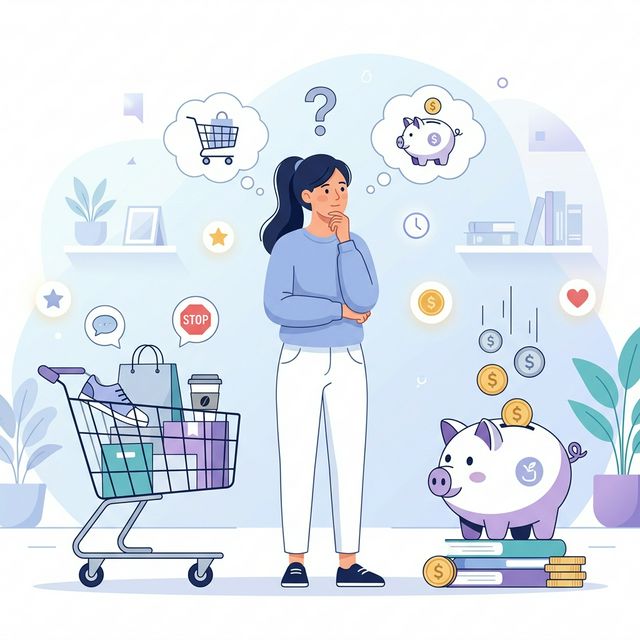
You pick up your phone to check the time and somehow end up buying a kitchen gadget you didn't know existed five minutes ago. Sound familiar? Impulse buying accounts for up to 40% of all consumer spending, according to research published in the Journal of Consumer Research.
The dopamine rush of clicking "Buy Now" is real — but so is the regret that follows. Here are 7 strategies rooted in behavioral science that can help you break the cycle.
Why We Impulse Buy
Before we dive into solutions, it helps to understand the psychology. Impulse buying is driven by a cocktail of factors:
- Dopamine anticipation: Your brain releases dopamine when you anticipate a reward, not when you receive it — which is why browsing feels so exciting
- Emotional triggers: Stress, boredom, loneliness, and even happiness can all trigger retail therapy
- Decision fatigue: After a long day of decisions, your willpower is depleted, making you more vulnerable
- Social pressure: Flash sales, limited-time offers, and "only 2 left!" create artificial urgency
7 Strategies That Actually Work
1 The 24-Hour Rule
When you feel the urge to buy something unplanned, add it to a wish list instead. Wait 24 hours. If you still want it tomorrow with the same enthusiasm, go ahead. Research shows that 70% of impulse purchases are abandoned after a cooling-off period. The initial excitement fades, and you realize you didn't actually need that avocado slicer.
2 Unsubscribe From Marketing Emails
Those "FLASH SALE: 50% off for the next 3 hours!" emails are designed to bypass your rational thinking. The average person receives 120+ marketing emails per week. Spend 15 minutes unsubscribing from promotional emails and watch your impulse purchases drop dramatically. Out of sight, out of mind.
3 Calculate the "Work Hours" Cost
Instead of looking at the price tag, convert it to hours of work. That $80 jacket isn't "$80" — it's "4 hours of your life" (at $20/hr). This reframing technique, called life-energy accounting, makes the true cost visceral and personal. Suddenly that impulse purchase feels a lot more expensive.
4 Delete Saved Payment Methods
One-click purchasing is the enemy of thoughtful spending. By removing saved credit cards from online stores, you add a small but powerful friction point. Having to get up, find your wallet, and type in a 16-digit number gives your rational brain time to catch up with your impulse. Adding even 30 seconds of friction reduces impulse purchases by up to 50%.
5 Shop With a List (and Stick to It)
It sounds old-fashioned, but it works. Whether it's groceries or clothes, making a list before you shop and committing to only buying what's on it eliminates the "wandering and discovering" that leads to impulse purchases. Bonus: shopping with a list also saves an average of 23% on grocery bills.
6 Identify Your Emotional Triggers
Start noticing when you impulse buy. Is it after a stressful day at work? When you're scrolling social media late at night? During lunch breaks when you're bored? Keeping a simple log of your emotional state when you make purchases reveals patterns you can then address directly — with a walk, a call to a friend, or a hobby instead.
7 Track the Joy, Not Just the Spend
Rate each purchase on a satisfaction scale after you've used it for a few days. You'll quickly discover that impulse buys consistently score lower than planned purchases. This creates a natural feedback loop that rewires your spending behavior over time — no willpower required.
How JoySpend Helps You Beat Impulse Buying
Tips 6 and 7 are at the core of what JoySpend does. Every time you log a transaction, you tag it Joyful, Good, Okay or Regret. Your insights can help you compare how different purchases felt over time.
This isn't about guilt or restriction — it's about awareness. When you can see, in cold hard data, that your late-night online shopping averages a joy score of 1.8 while your weekend coffee with friends averages 4.6, your behavior naturally shifts. You start choosing joy over impulse.
The Bottom Line
Impulse buying is a deeply human behavior driven by emotions, not logic. That's why logical strategies alone (like "just stop buying stuff") rarely work. The most effective approaches address the emotional root of the habit — by adding friction, creating awareness, and building feedback loops that make mindful spending the path of least resistance.
Start with one or two strategies from this list. The 24-hour rule and emotional trigger tracking are the easiest to implement and often the most impactful. And if you want a tool that makes emotion-aware spending effortless, give JoySpend a try — it's free, private, and takes just seconds per transaction.